















4 Reasons Why A Lift Truck Can Tip Over Sideways
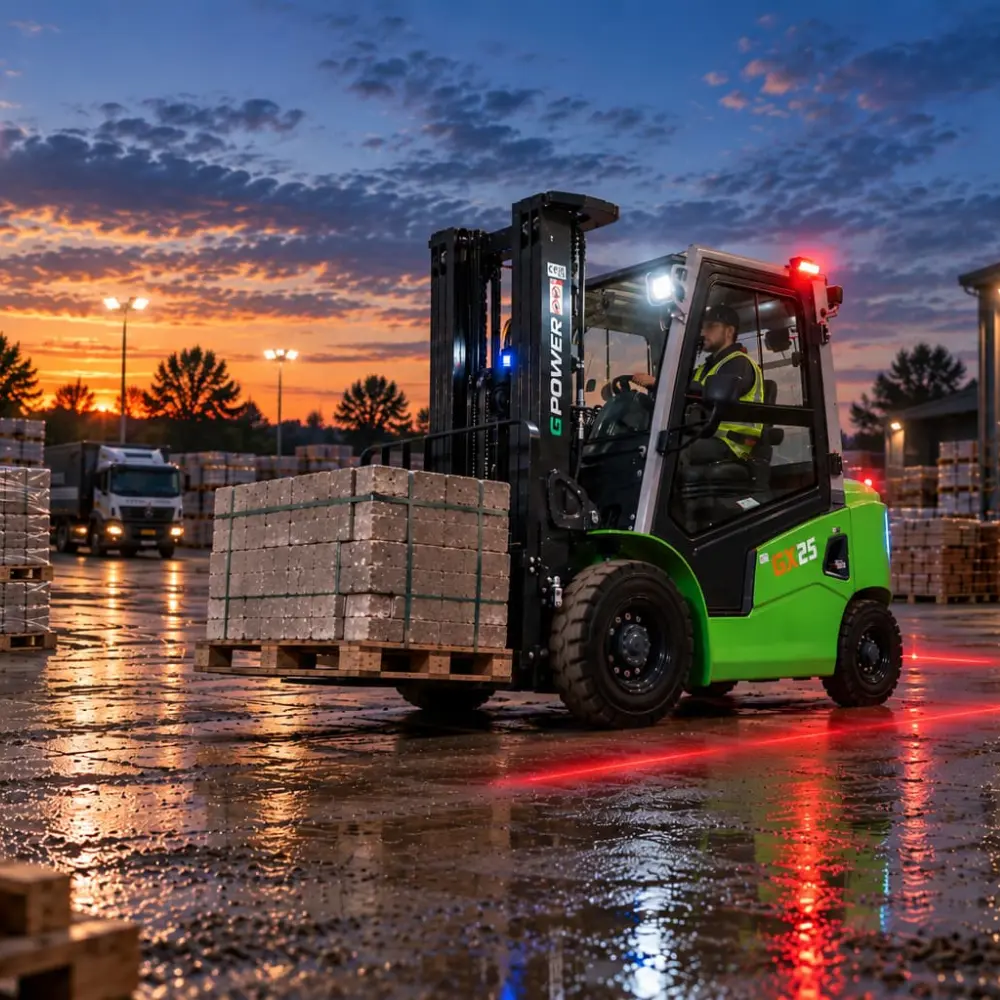
A forklift can tip over sideways when its operator is driving erratically, when lifting loads heavier than recommended on the data plate, when the loads are unbalanced, or when driven on uneven ground. These four reasons are why it’s vital to ensure your forklift operators receive routine safety refresher training and that your forklift is suitable for the evolving demands of your facility.
How to Prevent a Forklift Tip Over With Refresher Training
Refresher forklift training re-establishes the fundamentals of stability, reminding your operators of the importance of the stability triangle and load capacity of your lift trucks. Reinstating foundational knowledge can counteract bad habits and complacency, the root, personnel-accountable causes of a forklift tip-over while operating.
Four reasons why a lift truck can tip over sideways while operating are:
- Turning too sharply.
- Driving at excessive speed (especially with a raised load).
- Driving on slopes.
- Accelerating or braking too quickly.
When driven too casually, a forklift’s centre of gravity can shift, causing an imbalance that could result in dropped loads, tipped forklifts, and severe personnel injury. The hidden culprit behind these accidents is centrifugal force, which pushes the centre of gravity away from the centre of the turn. Centrifugal force only gets more powerful the faster and sharper the forklift, so it’s essential to keep to speed limits and drive carefully.
Refresher training can cultivate a strong safety culture among your operators, encouraging situational awareness that drastically reduces the chances of a forklift tipping over.

How Data Plates Stop a Forklift Tipping Over Sideways
Forklift data plates clearly define the maximum load the vehicle can safely carry. Every lift truck in the UK must have a current data plate reflecting its limits to prevent accidents, including tip-overs. The data plate is updated when a forklift’s rated capacity changes due to added attachments, replaced batteries, modifications, or when the plate becomes illegible.
When a forklift’s data plate is outdated or ignored, the chances of a forklift tipping over increase significantly.
The data plate is always installed in an accessible position on the forklift to ensure the operator can quickly and easily reference it before lifting any load.
Why Does an Unbalanced Load Make a Forklift Tip Over?
An unbalanced load makes a forklift tip over because it shifts the combined centre of gravity outside the vehicle’s stability triangle. The stability triangle is a delicately balanced area, comprising three points: the two front wheels and the centre of the rear axle. The stability triangle requires the load to be located along the machine’s centreline to keep the centre of gravity steady. When a load is incorrectly attached to the forks, it causes the forklift to lean, making any movement instantly more prone to causing a tip-over.

Although the points of a stability triangle always stay the same, its limits will vary from forklift to forklift. So, you must verify that your load is balanced correctly on the forks before moving.
What Classes as “Uneven Ground” for Forklifts?
Uneven ground, in relation to forklifts, refers to potholes, cracks, debris, slopes, and loose, wet, or unevenly settled surfaces. Each factor creates significant hazards through bouncing, tilting, and skidding that could lead to a forklift tipping over.
Some forklifts, such as rough terrain vehicles, are designed specifically for operation on these surfaces to prevent a forklift tip-over. Rough terrain forklifts have large, pneumatic tyres offering superior traction and weight distribution, which are rarely integrated in standard forklift trucks.
Before operating, ensure that the driving area is clear to keep the risk of your forklift tipping sideways as minimal as possible.
What to do When a Forklift is Tipping Over
- Tuck your feet in and stay in the truck.
- Firmly hold on to the steering wheel.
- Lean away from the point of impact.
- Brace yourself.
Making yourself as small and compact as possible is the recommended procedure when a forklift is about to tip. Following these steps works because your setbelt is designed to keep you in place and the overhead guard acts as a safety cage.
To prepare for an unexpected forklift tip over:
- Wear a seatbelt at all times.
- Keep the forks approximately three inches from the ground.
- Do not let anyone else ride on the forklift.
- Drive at the correct speed.
- Be vigilant of debris in your driving direction,
- Avoid icy, wet and oily surfaces.
- Never approach anyone with the forklift head-on.

Do Forklifts get More Unstable the Older They Are?
Forklifts generally become more unstable with age when wear and tear affects critical components, including the tyres, hydraulic system, forks, and brakes.
How do Tyres Affect Forklift Stability?
Worn, damaged, or improperly inflated tyres significantly impact the stability of a forklift. Old tyres can compromise a forklift’s traction and shock absorption, making each journey bumpy and unpredictable, and shifting the centre of gravity.
How the Forklift Hydraulic System Can Cause Instability
The hydraulic system is responsible for lifting functions and overall stability. When seals wear, fluid levels and air deplete, and masts drift, the forklift moves erratically, causing the center of gravity to shift and reducing operator control.
What Happens if a Forklift’s Forks Become Bent?
When forks bend, the forklift’s capacity is instantly and significantly reduced, and the general structural integrity is impacted. These problems make it difficult to raise and lower loads smoothly, creating an unstable environment for the loads and making forklift tip overs more likely.
Do Brakes Affect Forklift Stability?
Yes. Worn-out brake pads impair an operator’s ability to control the forklift, making any sudden movements a cause for a tip-over.
This is not to say that an older forklift is more susceptible to tip-overs than a younger model. The stability of an aged forklift depends entirely on the regularity of its maintenance intervals and the quality of part replacement. A well-maintained forklift can serve your warehouse for its entire projected lifespan. But sometimes forklifts are too far gone and too dangerous for their purpose, so replacement is necessary.
New and Used Forklifts at Trucks Direct
Trucks Direct is one of the UK’s leading suppliers of forklifts to facilities nationwide. Offering a fleet of diesel, gas, and electric forklift trucks in all conditions to our customers, comprehensively LOLER certified and guaranteed. Whether you’re looking for a new or used forklift to replace your current model, we have what you need.
Ensure your forklift meets the standards to prevent forklift tip-overs and enquire today.