






-
What is an articulated forklift?
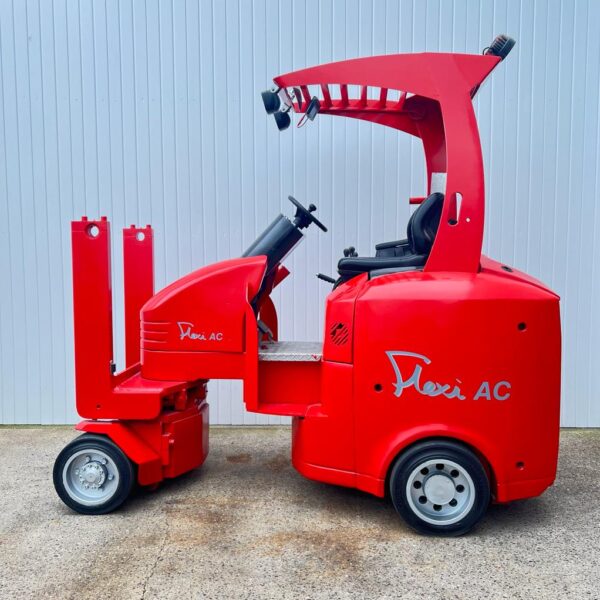
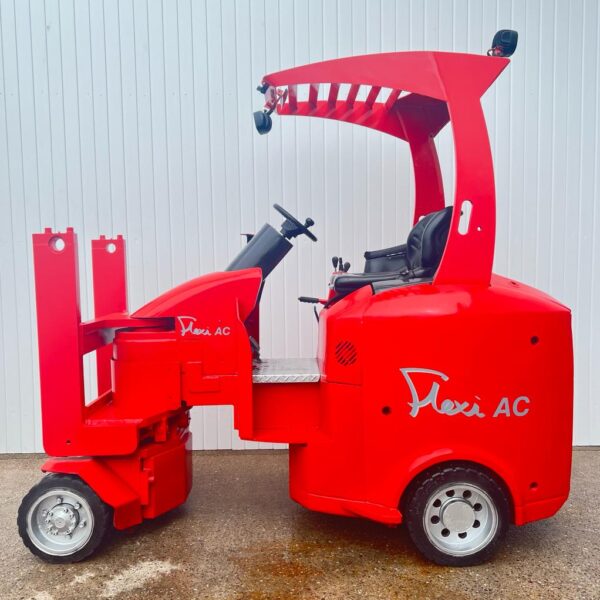
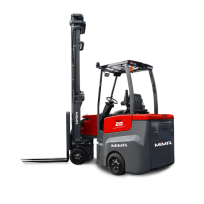
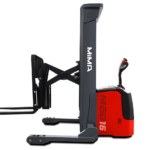
An articulated forklift is a specialist truck that uses an independently-pivoting mast, which moves separately from the vehicle's main body. An articulated joint within the mast allows the forklift to manoeuvre and bend in narrow aisles and tight spaces far more easily than a standard forklift. The space-saving features of reach trucks and counterbalance forklifts are combined in an articulated forklift to offer a compact solution for warehouse and distribution centres.
-
Where are articulated forklifts commonly used?
Articulated forklifts are well-suited to narrow warehouses and distribution centres thanks to their flexible components. Because articulated forklifts have a much smaller footprint than a standard forklift, you can move your racking closer together and increase storage capacity by up to 50%.
-
What is the advantage of the articulated joint?
The joints in articulated forklifts provide exceptional manoeuvrability (up to 220 degrees), allowing warehouses to increase their storage capacity significantly. Articulated forklifts can operate in aisles as narrow as 1.6 meters wide, much smaller than required for a standard counterbalance forklift. This improves productivity and efficiency, as only one forklift is needed to transport goods from the loading dock to the racking.
-
What attachments can be used with articulated forklifts?
Articulated forklifts can be equipped with various attachments, including side shifters, fork positioners and extensions, rotators, clamps, and push-pull attachments. Their primary function is to assist in navigating narrow aisles. Side shifters, for example, allow the operator to reposition the forks from left to right without moving the forklift, which helps make precise placement adjustments. The benefits of these other attachments include:
Fork Positioners - Allows the operator to hydraulically adjust the distance between the forks from the driver's seat, eliminating the need for manual readjustment to suit variously sized loads.
Fork Extensions - Provides extra fork length for handling long or oversized loads.
Rotators - Let the forks turn up to 360 degrees to handle specialised containers and for inverting or dumping bins.
Clamps - Grips the sides of specialised loads, including paper rolls, hay bales and large appliance boxes.
Push Pull Attachments - Uses slip sheets rather than wooden pallets to push and pull the load on or off of the forks; this saves a lot of space by comparison.
-
What is the maximum load capacity of articulated forklifts?
The maximum load capacity of an articulated forklift depends on the model and its size, but the total typically ranges from 1.5 tonnes to 3 tonnes. Heavy-duty models can handle slightly heavier loads, but you should always reference the forklift’s data plate information to determine the maximum load capacity of your particular forklift.
It is important to note that the actual capacity of an articulated forklift varies depending on the height at which you lift your goods. The higher a load is lifted, the less stable a forklift becomes. For example, a forklift that can lift 2.5 tonnes at 3 meters may only be able to lift 1.5 tonnes at 10 meters. This is why you must reference the data plate before lifting any type of load to ensure maximum safety while operating an articulated forklift.
-
What maintenance is required for articulated forklifts?
Articulated forklifts require daily inspections and biannual servicing of key components to ensure the vehicle is safe for use and in good working order. The day-to-day maintenance involves inspecting the tyres for wear, the forks and mast for bends, the hydraulic system for leaks, the safety equipment for functionality, the battery for water levels and the articulated joint for damage.
You should schedule a professional maintenance appointment every 250-500 operational hours your forklift undergoes. During these checks, the engine oil and filters will be changed, the air filters cleaned, the moving parts lubricated, the brake system adjusted, and the drive belts checked. These are preventative checks designed to identify developing problems before they become a risk to safety or the operation of your articulated forklift itself. By staying on top of lubricating the articulated joint of your forklift, you ensure the operation stays smooth and controlled.
Every 1,000-2,000 operational hours, you must arrange an in-depth service to change the hydraulic fluid and filters, adjust the steering wheel alignment, test the hydraulic cylinders, and test the drive hubs and transmission for leaks and damage.
Every 12 months, your articulated forklift must undergo a statutory LOLER inspection, which covers the entire machine. Only a competent person can conduct these checks, and they are legally mandated.
-
Are there safety considerations when operating articulated forklifts
Yes, any personnel operating an articulated forklift must be properly trained and certified, competently conduct daily checks of the forklift’s condition, and understand the forklift’s specific manoeuvrability requirements. Training should be specific to articulated forklifts, as their specialised use differs from that of a standard forklift, and can give rise to serious accidents. As an employer, you should ensure your staff undergo refresher courses to deter bad habits and ensure your articulated forklifts are operated safely at all times.
Before operating an articulated forklift, the masts, forks, and articulating joint must be checked for damage, wear or fluid leaks. If any of these problems are discovered, the issues must be reported immediately, and the vehicle cannot be used again until they are fixed.
While operating, the driver must be aware of the stability of the load. Ensuring the goods are always centred, securely placed on the forks, and within the capacity specified on the data plate is the best way to ensure the forklift does not tip. The articulated forklift must be driven at a safe, controlled speed at all times, avoiding abrupt stops, starts and turns that could cause collisions or tip-overs.
The main difference in safe operation between standard trucks and articulated forklifts is awareness of the zone in which the joint pivots. Because these forklifts have independently-moving front and rear sections, the personnel operating the forklift and those around it must be aware of this zone.
-
How do articulated forklifts compare to traditional forklifts?
Articulated forklifts are designed for manoeuvrability in narrow aisles, can transport goods from the docking station directly to the racking, and offer a cost-effective alternative to traditional forklifts. To achieve the same functionality, a warehouse could need multiple forklifts to meet the needs of high-density storage and general-purpose tasks. Although the load capacity of a traditional forklift is much higher than that of an articulated forklift, an articulated model can fulfil more operational requirements than a standard forklift truck.