












What are Scissor Lifts Used For?
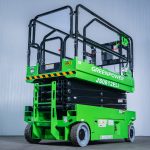
Scissor lifts are versatile machines that raise workers safely to elevated areas. They’re used across construction, retail, warehousing, and events. However, what makes them different from ladders or other lifts is their stability and efficiency. If you’ve ever struggled with reaching high shelves, changing signage, or working on uneven ground, a scissor lift solves those problems with ease.

What are the Different Types of Scissor Lifts?
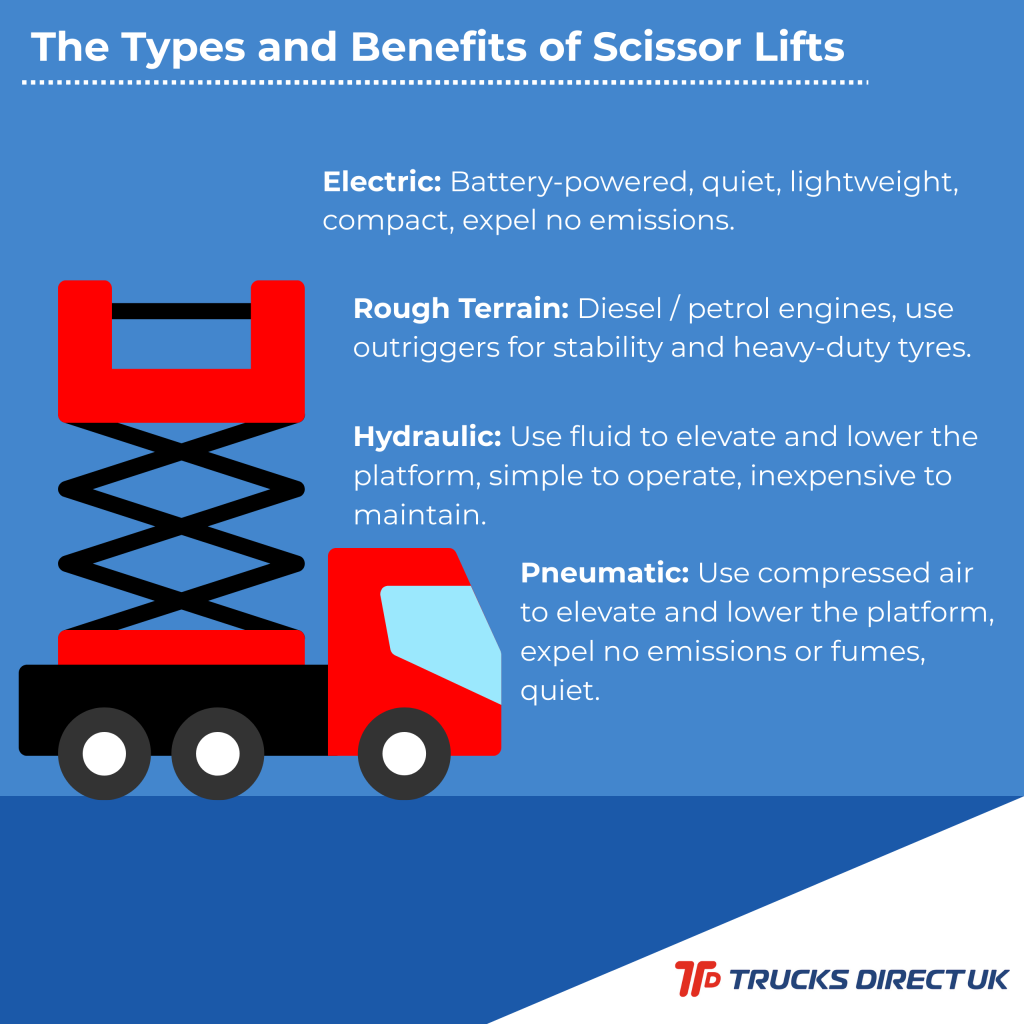
The different types of scissor lifts include electric, hydraulic, pneumatic, and rough terrain. Each of these scissor lifts is designed with specific areas of use in mind, such as indoors, outdoors, warehousing environments, and construction sites.
Why Purchase an Electric Scissor Lift?
Electric scissor lifts are lightweight and compact, and use non-marking tyres to prevent damage to flooring. Since they are battery-powered, they’re far quieter than diesel models and expel no emissions. These qualities make electric scissor lifts superbly suited for use indoors, in warehousing or shop floor environments. However, their tyres are made of a soft rubber compound, so they cannot be used outside. Rough terrains wear the tyres down comparatively much faster than they would for tyres manufactured for that use.
Why is it Important to use Only a Rough-Terrain Scissor Lift on Difficult Surfaces?
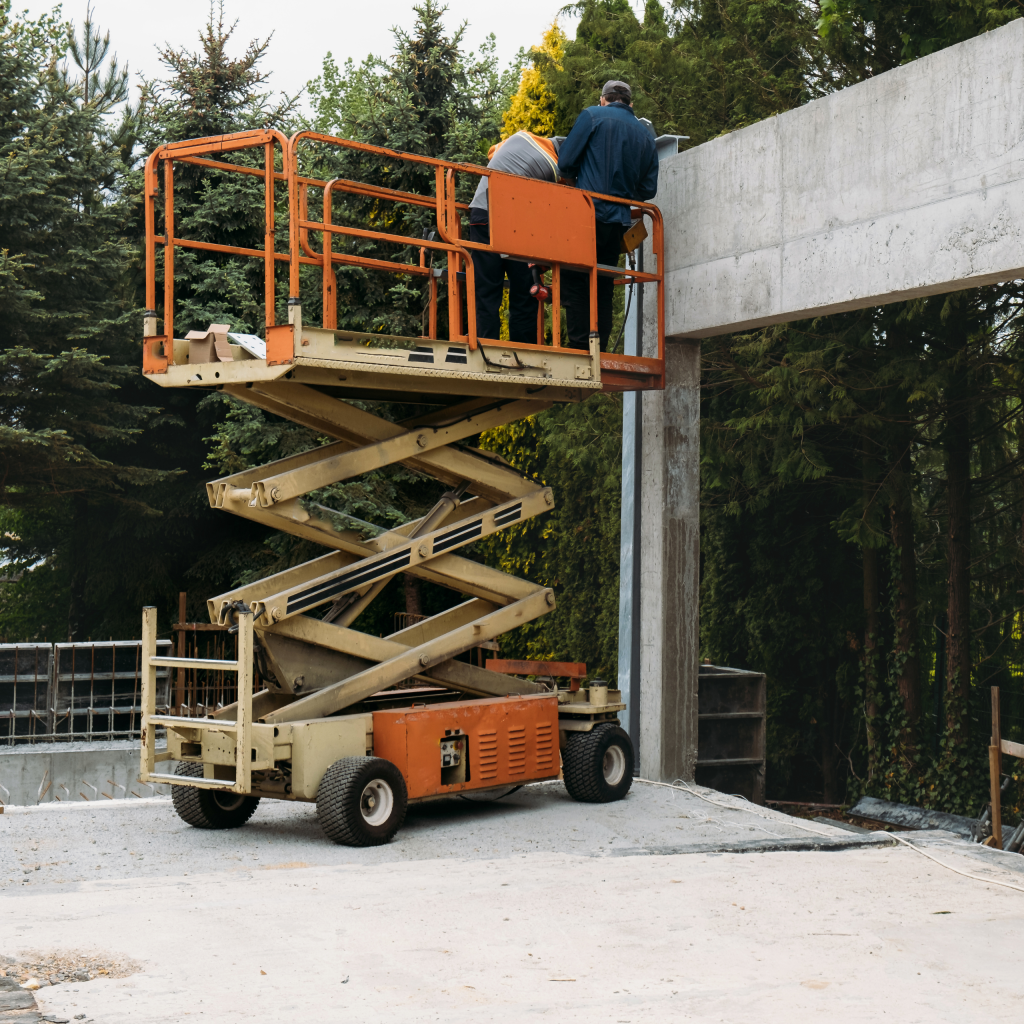
Rough terrain scissor lifts are typically powered by diesel or petrol engines to provide the power that rugged surfaces necessitate. They use outriggers to ensure the machine stays level and stable on uneven ground, and heavy-duty tyres to maintain smooth driving. Standard scissor lifts struggle to offer the steadiness that rough terrain scissor lifts provide.
They are best suited for construction sites with debris and unpaved industrial projects. They can be used indoors, but their superior stabilising qualities would be wasted on flat flooring.
What is a Hydraulic Scissor Lift?
A hydraulic scissor lift is a machine that uses hydraulic fluid to power the elevation and lowering of a platform. Categorically, hydraulic scissor lifts are considered the simplest to operate and the least expensive in maintenance costs. They’re the most commonly used scissor lift, found everywhere from auto repair shops to construction sites and warehouses.
Why Buy a Pneumatic Scissor Lift?
Pneumatic scissor lifts use compressed air pressure instead of hydraulic fluid or fuel. This means they expel no emissions or fumes and are comparatively quieter than conventional scissor lifts. These qualities make them perfect for environments demanding cleanliness, including food processing plants, clean rooms, and other sensitive indoor environments.

.
What Industries are Scissor Lifts Used in?
Scissor lifts are used in construction and maintenance, warehousing and logistics, event and entertainment production, and retail. They help to streamline inventory management, perform maintenance, set stages, install electricals, and do repair work.
Construction and Maintenance
Scissor lifts are instrumental for off-the-ground tasks like painting, installing electrics, and making repairs on roofs or high walls. They provide a spacious platform to hold materials and tools, and offer enough floor space for a worker to move flexibly.
Warehousing and Logistics
Warehouses with tall shelves and racking can be difficult to access with forklifts and dangerous to access with steps. However, a scissor lift can elevate personnel directly to the racking, offer space for the products to be stored on descent, and offer a safe option for inventory management.
Event and Entertainment Production
Scissor lifts can help staff hang lights, assemble stage decorations, and position cameras for filming and photography.
Retail
Scissor lifts are used in large retail facilities to stock high shelves, switch signage, and perform general store maintenance. They are a far safer and more stable option for conducting these tasks.

.
How to be Safe Operating Scissor Lifts?
Falling from height makes up 8% of all workplace accidents. So, to be safe while operating a scissor lift, you must understand the guidelines associated with its use, conduct regular inspections of the machine, and know the emergency procedures.
Undergo Training or Re-Training
Only trained and certified employees should operate a scissor lift due to the risks to life and property. Scissor lift training is conducted and certified by the International Powered Access Federation (IPAF), which awards a Powered Access Licence card.
Training involves learning relevant health and safety regulations, including the Provision and Use of Work Equipment Regulations and Work at Height Regulations. The theory portion of your course will also cover the different types of Mobile Elevating Work Platforms and their uses, pre-use checks and inspection procedures, safe operating methods, and hazard identification. Finally, the emergency procedures and rescue plans.
The practical part of your scissor lift training involves familiarising yourself with the controls and safety features of the specific machine you will operate. Then, acting upon this, by manoeuvring, driving, and positioning the scissor lift in a controlled environment. Once you understand how to safely move the machine, you will be tested on safely raising and lowering the platform and practising emergency lowering procedures.
Inspect the Scissor Lift Before Operating, Every Time
Before operating a scissor lift, it is vital to thoroughly inspect the lift, including its controls, guardrails, and tyres. This ensures there are no developing issues that could affect its safe functioning.
Check the Area for Hazards
Before operating your scissor lift, you must ensure there are no potential hazards, including uneven ground, potholes, and overhead power lines. Doing so will prevent tip-overs, electrocution, and loss of life.
Consistently Reference the Scissor Lift’s Load Limits
Before lifting a load, you must reference the scissor lift’s data plates to ensure the machine can handle the load you want to lift. By exceeding the manufacturer’s specified weight capacity, you increase the risk of tipovers and straining the machine.
.
Scissor Lifts for Sale at Trucks Direct
Trucks Direct is the UK’s leading independent supplier of material handling equipment. Stocking leading brands from JCB and Caterpillar, to Bendi and Flexi, we ensure your machines are capable, reliable, and covered from the start. We guarantee every truck is LOLER certified and offer up to 2 years’ warranty to give you total peace of mind.
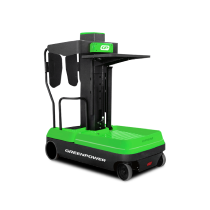
Browse our selection of scissor lifts today and improve your operational flexibility with quality-assured Greenpower models at industry-leading prices.