










How to Still Get Up to 100% Tax Relief on a New Forklift
You may have heard that a key HMRC tax relief scheme reached the end of its original window on 31 March 2026. If you were counting on it, or simply hadn’t got round to pulling the trigger on a new forklift purchase, it’s easy to assume the opportunity has passed.
It hasn’t.
The good news is that there are not just one, but three legitimate routes through which UK businesses can still claim up to 100% tax relief on the cost of a new forklift truck. The rules are clear, HMRC-approved and very much alive. Here’s what you need to know.

How Did the Forklift Tax Relief Change on 31 March 2026?
The scheme many businesses had been using, particularly the temporary Full Expensing window, was originally introduced in April 2023 as a successor to the old Super Deduction, which itself ended in March 2023. In its original form, Full Expensing was a temporary measure running until 31 March 2026.
Here’s the twist. The government announced it would make Full Expensing permanent at the Autumn Statement in November 2023, and this was subsequently legislated in Finance Act 2024. So the specific deadline that some businesses had been focused on came and went without the relief actually disappearing. The headlines around the ‘31 March’ date created some confusion, but the substance of the relief remains firmly in place.
That said, it’s a good moment to step back and understand exactly what’s available. Because there are now three distinct routes to consider, and the right one will depend on your business structure and circumstances.
Route 1: Full Expensing (Limited Companies Only)
If your business is incorporated, Full Expensing is your most suited option.
Full Expensing allows you to deduct 100% of the cost of qualifying new plant and machinery from your taxable profits in the year you make the purchase. For a forklift truck, that means the full purchase price comes off your profit before tax is calculated. With Corporation Tax currently sitting at 25% for most companies, that translates to a tax saving of up to 25p for every £1 you invest.
The key conditions are:
- The forklift must be brand new and unused, not second-hand
- It must be purchased outright by the company (not leased from a third party)
- It must be used in the business, not bought to lease to someone else
- The claim must be made in the accounting period in which the expenditure is incurred
Important note on disposal: If you later sell the forklift, a full balancing charge equal to 100% of the disposal proceeds will be brought into your taxable profits in the year of sale. So if you sell a forklift for £20,000 on which you claimed full expenses, your taxable profits increase by £20,000 in that period. This is a significant consideration for businesses that regularly trade equipment in, and it may make the AIA a more efficient route in some circumstances, since pooled assets are treated more favourably on disposal.
The beauty of Full Expensing is that there’s no cap on the amount you can claim. For businesses investing in multiple forklifts or a full fleet, this distinction matters.
| Relief | 100% in Year of Purchase |
| Who Qualifies | Limited Companies (Corporation Tax Payers) |
| New or Used | New Equipment Only |
| Cap | No Upper Limit |
| Status | Permanent (as of November 2023) |

Route 2: The Annual Investment Allowance (AIA)
The Annual Investment Allowance, or AIA, is arguably the most flexible and widely applicable of the three options. Unlike Full Expensing, it is open to all UK businesses, regardless of how they are structured.
The AIA allows any business to deduct 100% of the cost of qualifying plant and machinery from taxable profits, up to a limit of £1 million per year. That £1 million threshold has been set permanently at this level since Spring 2023, having been temporarily raised from £200,000.
For the vast majority of forklift buyers, whether purchasing a single truck or a handful, the £1 million limit is more than sufficient. And because the AIA covers second-hand equipment as well as new, it gives you more flexibility when it comes to sourcing.
Who can use the AIA?
- Sole traders
- Partnerships (where all partners are individuals)
- Limited companies
- Most other UK businesses subject to income tax or corporation tax
Key advantages over Full Expensing:
- Available on second-hand forklifts as well as new
- Open to unincorporated businesses (sole traders, partnerships)
- No restrictions on equipment bought for leasing in certain circumstances
- Simpler to claim for businesses that may not meet all Full Expensing criteria
One thing to note: where a business is part of a group or under common control, the £1 million AIA limit must be shared between related entities. If you operate multiple companies, it is worth speaking to your accountant to plan the most efficient approach.
| Relief | 100% in Year of Purchase |
| Who Qualifies | All UK Businesses (Sole Traders, Limited Companies and Partnerships) |
| New or Used | Both New and Second-Hand Equipment |
| Cap | £1 Million Per Year |
| Status | Permanent |
Route 3: The New 40% First-Year Allowance
Introduced as part of the Autumn Budget 2025, a brand-new 40% First-Year Allowance (FYA) came into effect from 1 January 2026 for companies, and 6 April 2026 for sole traders.
While it does not offer the full 100% relief of the AIA or Full Expensing, the 40% FYA fills a gap that has frustrated businesses for years. It is available on assets purchased for leasing, something that neither Full Expensing nor the AIA covers.
Here is how it works: you claim 40% of the asset’s cost in the year of purchase. The remaining 60% is added to your main pool, on which you then claim writing-down allowances in subsequent years. It is worth noting that the main pool writing-down allowance rate has been reduced from 18% to 14% per year, effective from 1 April 2026 for companies and 6 April 2026 for sole traders and partnerships. This is part of the same Autumn Budget 2025 package that introduced the 40% FYA. This means the remaining 60% will be relieved more slowly than under the previous rate, which is worth factoring into your cash flow planning.
Where the 40% FYA is particularly useful:
- Businesses that hire out or lease forklifts to third parties
- Companies whose AIA limit has already been exhausted in the same tax year
- Unincorporated businesses (sole traders, partnerships) investing beyond their £1 million AIA limit, who were previously excluded from any first-year allowance on excess expenditure
- Any business making purchases for leasing where previous reliefs were unavailable
Important note on timing: Like Full Expensing, the 40% FYA applies to new and unused assets only. If you are purchasing a second-hand forklift, you will need to route your claim through the AIA instead.
| Relief | 40% in Year of Purchase. Remainder via Writing-Down Allowances |
| Who Qualifies | All UK Businesses (Sole Traders, Limited Companies and Partnerships) |
| New or Used | New Equipment Only |
| Leasing | Yes, Available on Assets Purchased for Leasing |
| Status | Permanent |
So Which Tax Relief Route Is Right for Your Business?

The short answer: use Full Expensing if you are a limited company buying a new forklift outright, as it offers 100% relief with no cap. If you are a sole trader or partnership, or if you are buying second-hand equipment, the AIA is your equivalent route, again delivering 100% relief up to £1 million.
The 40% FYA comes into play where the other two routes are not available. This may be if your AIA is already fully used, or if the forklift is being purchased as part of a leasing arrangement.
In practice, many businesses will use a combination. A company might claim Full Expensing on a new warehouse forklift and then use the AIA on refurbished support equipment in the same year. The key rule is that you cannot claim two allowances against the same expenditure, but you can use different allowances across different assets.
A Few Practical Points Before You Buy
As with any tax planning, the timing and structure of your purchase can affect the relief you receive. Here are a few things worth keeping in mind:
- Claim in the right period: For both Full Expensing and the AIA, the relief must be claimed in the accounting period in which the expenditure is incurred. You cannot carry it forward.
- Check second-hand eligibility: Full Expensing is restricted to new and unused equipment. If you are buying used, route your claim through the AIA instead.
- Finance arrangements matter: Equipment purchased on hire purchase may still qualify, but operating leases or rental agreements are treated differently. Speak to your accountant if you are financing through a third party.
- Keep clear records: HMRC expects detailed records of capital expenditure. Make sure you retain invoices, delivery notes and payment evidence.
- Get specialist advice: The interaction between Full Expensing, AIA and the new 40% FYA can be nuanced, particularly for groups of companies or businesses approaching the £1 million AIA threshold. Speak to an expert to ensure you follow the most efficient route.
Ready to Invest in a New Forklift?
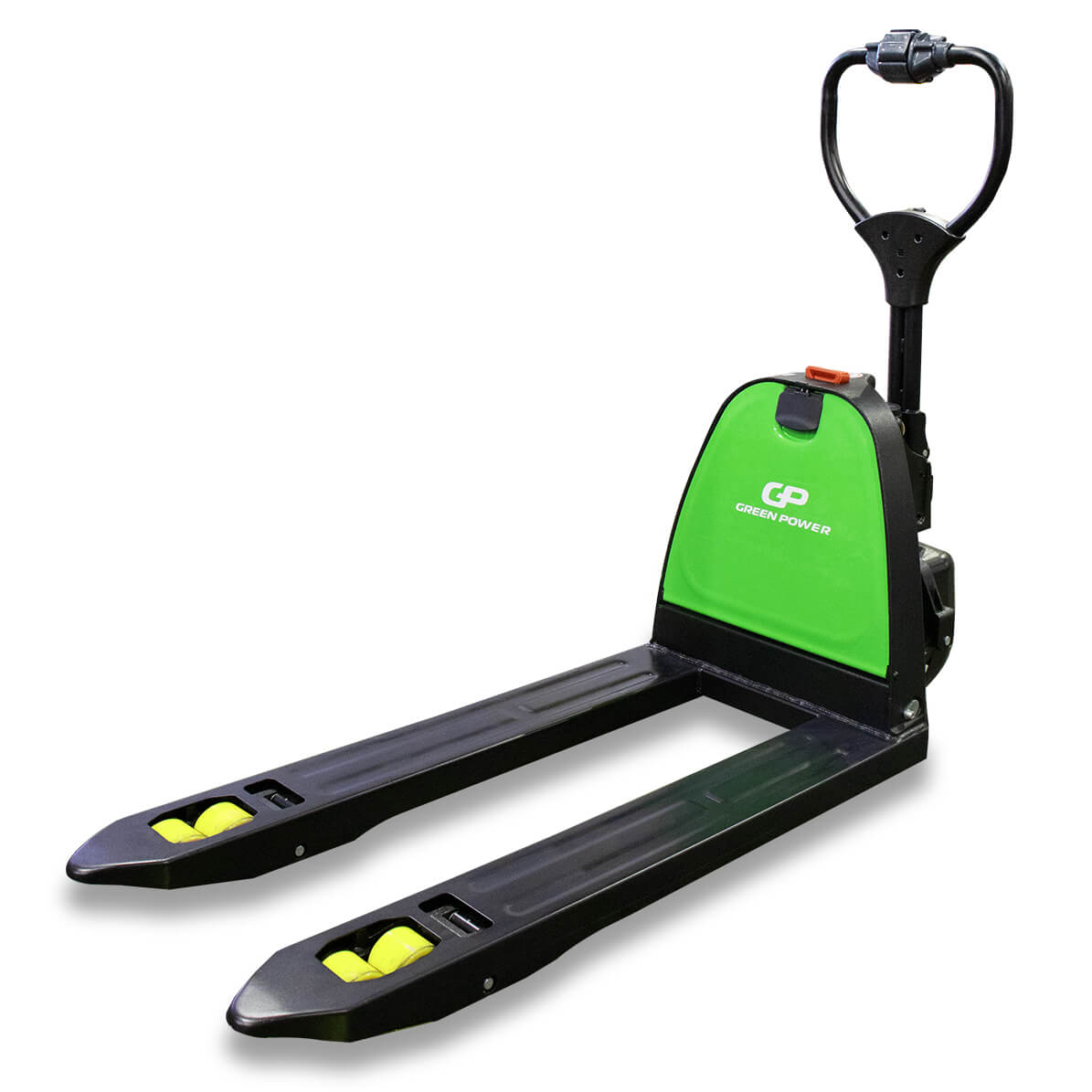
At Trucks Direct, we stock one of the UK’s largest ranges of new and used forklift trucks. From compact electric warehouse trucks to heavy-duty diesel counterbalance machines. Whether you are replacing a single unit or expanding an entire fleet, our team can help you find the right truck at the right price.
With 100% tax relief still very much on the table, there has rarely been a better time to invest in new lifting equipment. Get in touch with the team today to discuss your requirements.