









UK Forklift Insurance, Liability and Employer Duty: What You Must Know Before Hire or Purchase
As an employer, it is your responsibility to:
- Arrange the right forklift insurance.
- Ensure you train your drivers properly.
- Keep your equipment up to code at all times.
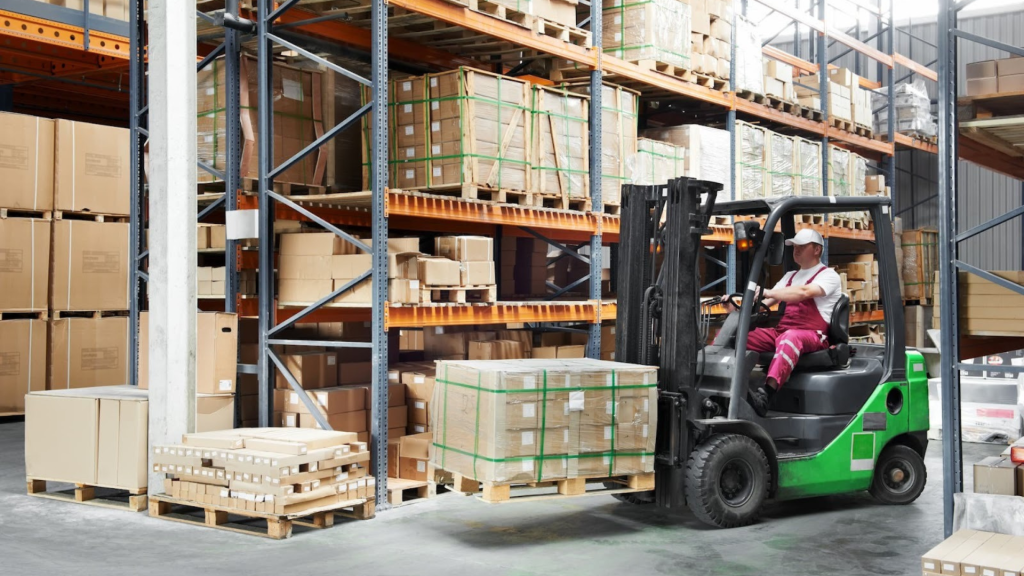
Hiring or purchasing a forklift is a game-changer for business productivity. However, you must understand the basics of liability insurance and your duty as an employer before acquiring a forklift to ensure it can fulfil its purpose.
Everything You Need to Know About UK Forklift Insurance
The type of forklift insurance you need in the UK depends on where you drive the forklift and whether you own it or are hiring it.
| Type of Cover | Is it Legally Required? | What Does it Protect? |
| Public Liability | No, but it is highly recommended. | Injuries to visitors or damage to their property. |
| Employer’s Liability | Yes. | Injuries to your staff. |
| Road Risk Insurance | Yes (when driven on the road). | Damage/injury caused on public roads. |
| Hired-In Plant | Subject to contractual agreement. | The cost of the machine if it is stolen or damaged. |
Do I Need Forklift Insurance When I Drive on Private Land?
Although not legally required, we highly recommend you arrange Public Liability (PL) insurance when driving a forklift on strictly private land (e.g., a closed warehouse). PL insurance covers legal costs and compensation in the event of collisions and accidental damage with visitors while on-site.
However, if your private land is accessible to the public, you may need third-party forklift road insurance. In these scenarios, liaise directly with insurance companies to understand your coverage. Conversely, if you drive your forklift off-site, you need third-party forklift road insurance.
Important Note: Standard Public Liability insurance often excludes “Motorised Vehicles” because insurers categorise forklifts as specialised types of vehicles. For this reason, you will need a specialised “Plant and Machinery” forklift insurance policy to avoid refusal of your claims.
Do I Need Public Liability for a Forklift When I Already Have Employer’s Liability Insurance?
Although only Employer Liability is legally required, it is highly recommended to get both Public Liability (PL) and Employer’s Liability (EL) insurance to operate forklifts on your site.
- Employer’s Liability covers injury to your staff, and is a legal requirement for businesses.
- Public Liability covers injury or damage to third parties, including visitors and equipment
Legally, your Employer’s Liability insurance must cover a minimum of £5,000,000. However, coverage of £10,000,000 if often the industry minimum.
Important Note: Many insurance policies do not cover the cost of fallen stock. For example, if a forklift drops £10,000 of your customer’s goods, your customer will not get that money back unless you have “Lifted Goods” cover, on top of your liability cover.
When You Need Third-Party Forklift Road Insurance
You need third-party (Road Risk) forklift road insurance if your forklift ever touches a public road. Even if you only cross between two warehouses, it is legally a motor vehicle, and you must insure it as such.
Under the Vehicle Excise and Registration Act 1994, if you drive your forklift on the road, it must:
- Be registered and taxed with the DVLA (V5C document).
- Display legible number plates.
- Have third-party forklift road insurance.
- Have a flashing amber beacon if travelling under 25 miles per hour (most forklifts have a top speed of below 25mph, so the beacon alerts other drivers to a slow-moving hazard).
Important Note: If your forklift travels less than 1,000 yards on public roads in one go, it is usually classed as a Works Truck. This categorisation means your truck can be exempt from many strict “Construction and Use” rules, including the need for indicators, mirrors, or speedometers (unless used at night). You still need road-specific insurance, but most insurance providers offer a simple “Works Truck” policy that handles all the complexities.
If your forklift travels more than 1,000 yards on public roads in one go, it must comply with the full Construction and Use Regulations. This regulation requires your forklift to have mirrors and indicators, and demands more complex insurance policies.
License Requirements: Forklift operator training does not automatically allow someone to drive on public roads. If a forklift is driven on the road, the operator must also hold a valid UK driving licence.

What Insurance Do I Need for a Hired Forklift?
Many forklift hire companies will include some level of insurance, but additional coverage is often necessary. The extent of your coverage will depend on your hiring company’s specific policies. So, ensure you understand their terms fully before assuming you need nothing extra.
Generally, the supplier’s insurance only covers their liability, not your accidents. Therefore, if the truck is stolen from or damaged in your yard, you are liable for the full replacement cost, unless you have “Hired-In Plant” cover.
Important Note: Check your hiring policy to determine whether Continuing Hire Charges are included. These charges mean that if your hired forklift is stolen, you will continue to pay your monthly fee until the forklift is replaced.
As an Employer, What Forklift Operator Training Do I Need to Give My Employees?
As an employer, you are legally responsible for providing comprehensive forklift operator training to your employees. This process starts with three mandatory stages of training: basic, specific, and familiarisation. However, it also extends to certain specialised machinery, to ensure your employees are fully safe and competent.
Basic Forklift Training
Basic forklift operator training covers the theory and fundamental skills of operating a forklift, including:
- Steering
- Stacking
- Safety
This phase is where your employees receive their initial certificate.
Specific Job Training
This stage is tailored to your business, including specific truck models, unique loads, and site rules. This step covers theory and basic practical assessments, ensuring your employees are equipped to operate forklifts within your facility.
Familiarisation Training
This practical phase of forklift operator training involves your employees physically applying their skills in your warehouse. This final part is done under supervision and allows your driver to get used to your racking and traffic routes.

When Do You Need Refresher Forklift Operator Training?
The Health and Safety Executive (HSE) recommends you arrange refresher forklift operator training every 3 to 5 years. This prevents your operators from developing bad habits and keeps your warehouse compliant with PUWER safety standards.
Other situations which call for refresher training include:
- Changes to the environment: if you move to a new location, you must ensure your drivers know how to navigate it.
- If operators falter: if you spot near misses or accidents, a refresher course helps to prevent them from happening again.
Important Note: If you move drivers between different types of forklifts (e.g., Counterbalance to Pivot-Steer), you must arrange a Conversion Course.
What are the Main Forklift ABA Categories?
The Accrediting Bodies Association (ABA) forklift categories segment different truck types to determine which type of training is necessary. They are also categorised based on their capacity and operator position.
As an employer, it is your responsibility to ensure your operators are trained for your specific type of forklift.
Group A – Powered Pallet Trucks
- A1, A2, A5-A7: Pedestrian/Rider, Electric/Manual Pallet/Stillage Trucks.
Group B – Counterbalance Lift Trucks
- B1: Rider Counterbalance (Electric & I.C.E.) up to 5000kg.
- B2: Medium Counterbalance (5000kg – 15000kg).
- B3: Large Counterbalance (Over 15000kg).
- B4: Stand-on Counterbalance (merged with B1 in some updates).
Group C – Sideloader
- C1: Side Loader up to 5000kg.
- C2: Side Loader 5000kg – 15000kg.
Group D – Reach/Straddle Trucks
- D1/D2/D3: Rider Reach and Straddle Trucks (updated to D1 for most, including high-level and stand-on).
Group E – Order Pickers
- E1: Medium/High-Level Order Picker.
- E0: Low-Level Order Picker.
Group F – Very Narrow Aisle (VNA)
- F1: VNA Lateral/Front Stacking Truck.
Group J: Rough Terrain
- J1: Rough Terrain Masted Trucks.
- J3/J5: Rough Terrain Telehandlers.

What Changes Have Been Made to the ABA Categories?
The D1 and D2 categories, which split forklifts by height, have merged. Now, the certificate states the specific height at which the driver was tested. Conversion training is necessary if you hire or purchase a forklift that lifts higher than the driver is certified to operate.
Low-level order pickers are no longer lumped with general pallet trucks; they are individually categorised (E0).
Vertical stock pickers are now in a new category, SP1.
Counterbalance B1 includes stand-on counterbalance trucks, which were previously categorised under B4.
Important Note: If your operator holds an “old” certificate (e.g., A2 or D2), it is still valid until its expiry. However, when you hire a new machine, you must check the model’s current ABA category to ensure your driver’s existing skills are officially recognised for that specific truck.
How Often Do I Need to Maintain My Forklift?
You must ensure your forklift is continually PUWER-compliant and undergoes a LOLER Thorough Examination every 6 to 12 months. The regularity of Thorough Examinations depends on whether your forklift is used to lift personnel or exclusively goods. You must have goods forklifts examined every 12 months, and personnel forklifts every 6 months.
Important Note: As well as professional third-party inspections, daily, weekly and monthly inspections are necessary. Doing these ensures you catch developing problems before they affect the safety of your machine.
What is PUWER?
PUWER is an acronym for the Provision and Use of Work Equipment Regulations 1998. It primarily focuses on ensuring that working equipment is safe throughout its working life. PUWER offers guidance on suitability for purpose, maintenance, inspection, and necessary training for safe use.
The definition of working equipment under PUWER is broad. It can apply to something as simple as a printer, or as major as a scissor lift. Essentially, PUWER covers any machinery, appliance, apparatus, tool or installation used in a workplace.
What are the Requirements of PUWER?
Suitability
- The equipment must be suitable for its intended purpose and working environment.
Maintenance
- You must maintain the equipment to ensure visual condition and efficient working order.
Inspection
- You must inspect equipment before its first use. It must also be thoroughly assessed periodically, in an impartial setting, and regularly in-house.
Training
- Only trained personnel are permitted to operate the equipment.
Safety Features and Controls
- Equipment must have appropriate protective devices, controls, and display markings.
What is the Difference Between PUWER and LOLER?
PUWER addresses the general safety of a piece of equipment. LOLER covers the safety of the lifting elements. When PUWER became a staple of forklift rules and regulations in the UK, a gap presented itself. Despite the comprehensive nature of PUWER, the vital aspect it missed was the assessment of the load-bearing components. Fortunately, LOLER handles that aspect of forklift safety rules.
What is LOLER?
LOLER is an acronym for the Lifting Operations and Lifting Equipment Regulations 1998. It is one of the only forklift regulations in the UK that is specifically for forklifts, and does not apply to other types of equipment. Its most critical aspect, which sets it apart from other forklift rules and regulations in the UK, is its requirement for a Thorough Examination.
What is a Thorough Examination?
A Thorough Examination is, essentially, the forklift version of an MOT. It is a systematic, detailed inspection, which only a Competent Person from a third-party company can conduct. This person will understand the necessary practical and theoretical knowledge required to complete an impartial investigation.
A Thorough Examination is required every 6 months for lifting equipment used to raise personnel. But this period extends to 12 months if it is only used to lift and lower goods. However, there are exceptional circumstances to this rule. If a piece of equipment is majorly altered, repaired, or has not been used for an extended period, a Thorough Examination is required.
What is the Purpose of LOLER?
The purpose of LOLER is to ensure that lifting equipment is of adequate strength and stability. The initial responsibility to achieve this falls to the equipment manufacturer. However, once the lifting equipment is bought, it is the employer’s responsibility to ensure that the equipment is maintained to preserve its strength. Furthermore, the operator has a responsibility to ensure the equipment’s capacity is not exceeded when in use.
How is the Maximum Capacity of Lifting Equipment Exceeded?
You can exceed the maximum capacity of a piece of lifting equipment by overloading it or not accounting for attachments. When the load is too heavy or attachments are fitted to a piece of lifting equipment, its centre of gravity changes. In forklifts, the centre of gravity must stay within its stability triangle to prevent overturning and overload.
The LOLER legislation mandates that all lifting equipment has its Safe Working Load (SWL) clearly stated on its data plate. So, unless the equipment has sustained unidentified damage or the data plate is not legible, there should be no reason to exceed its maximum capacity.

Want to Try a Forklift Before You Buy?
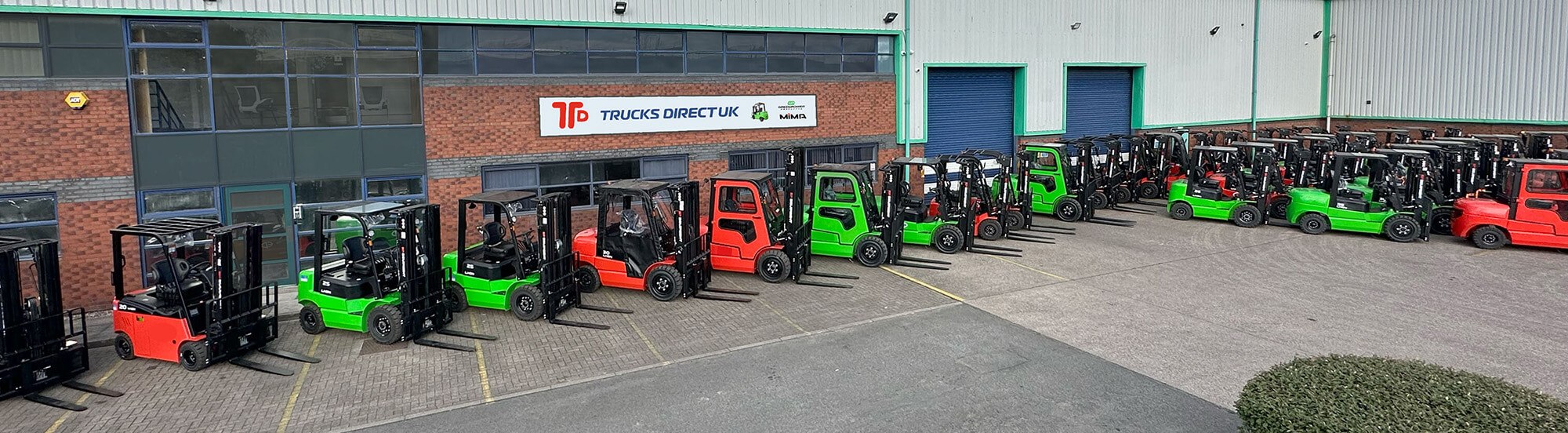
Trucks Direct UK supplies and hires 12-month LOLER-certified forklifts to businesses across the UK. We offer flexible terms and fully transparent conditions so you can rest assured that you will receive a sound machine. With hundreds of forklift trucks for sale and hire at our 40,000 sq ft warehouse, come and see us, or get in touch for more information.