















What is an Electric Forklift Pre-Shift Inspection Checklist?
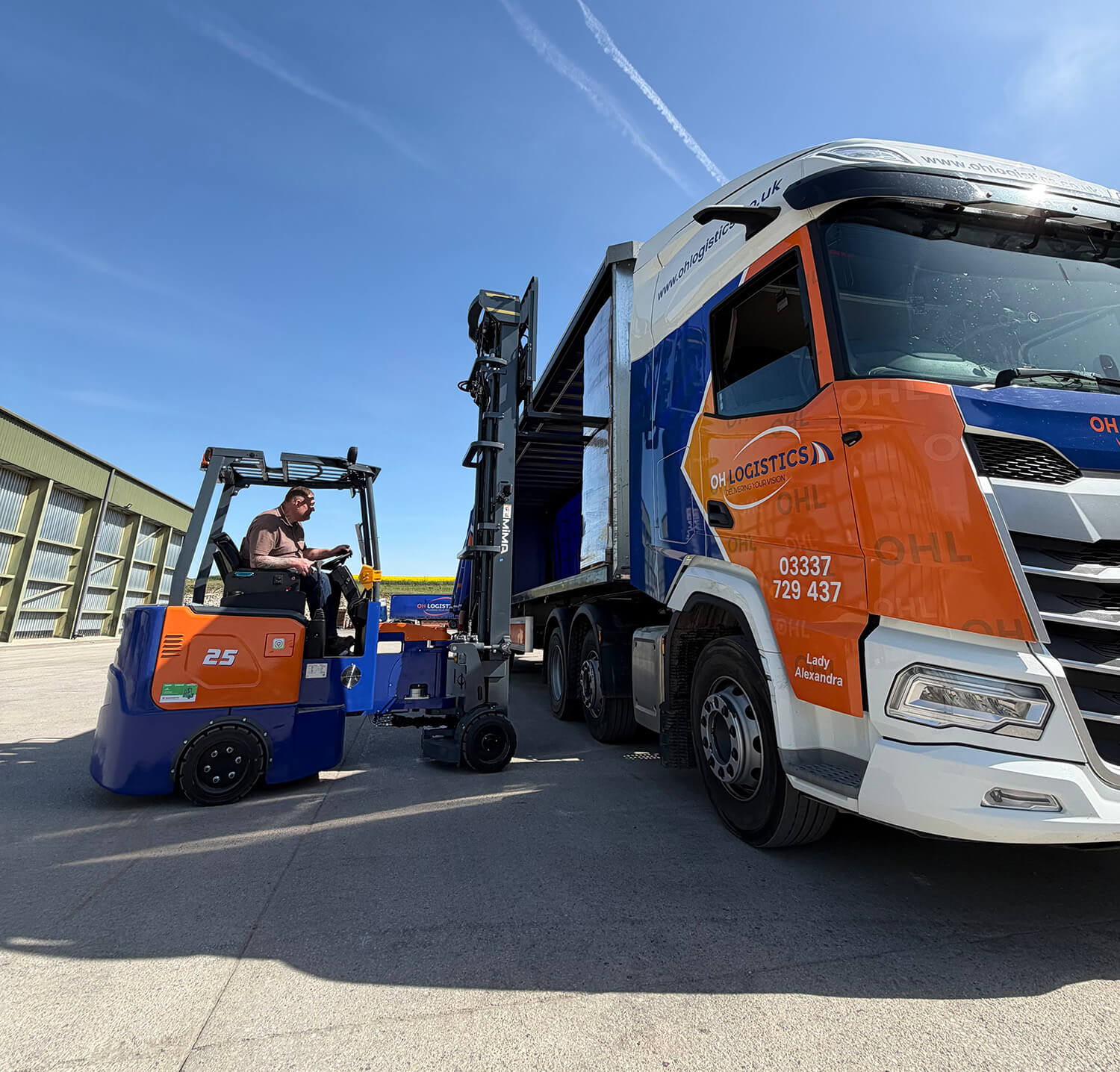
An electric forklift pre-shift inspection checklist assures your forklift is safe for use. It involves basic visual and manual assessments of vital components. These checks help to identify detrimental developing problems. Part failure will impact the reliability and safety of your forklift. So, choose competent staff to conduct a pre-shift inspection of your electric forklift.
What Does an Electric Forklift Pre-Shift Inspection Checklist Involve?
An electric forklift pre-shift inspection checklist consists of visual and operational checks. Visual checks occur when the forklift is off. Furthermore, you conduct operational assessments when you activate the forklift. Both aim to ensure the equipment is in safe working order before you drive it.


Key-Off (Visual Checks)
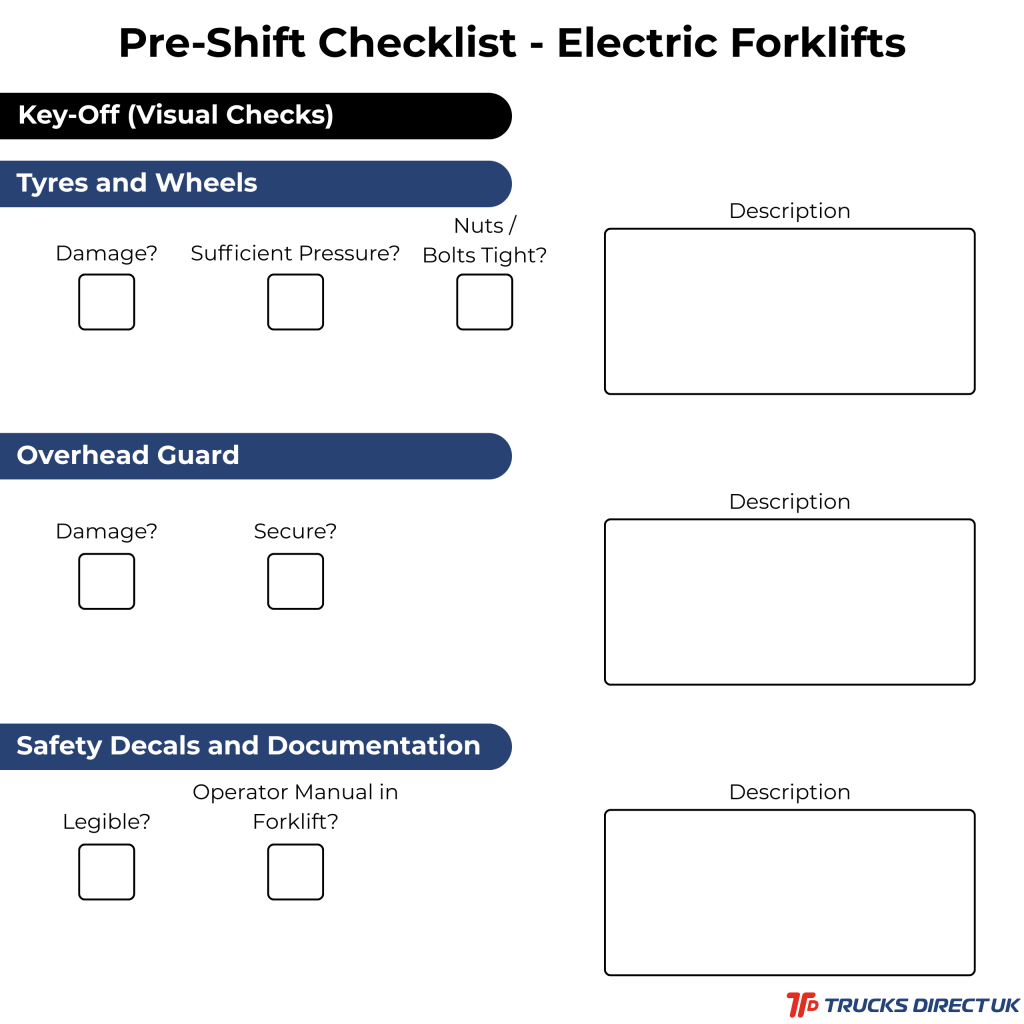
Key-off checks involve assessing the general condition of the electric forklift. They affect every aspect of the forklift, from the battery to the legibility of the data plate. You must inspect these components daily to maintain operational safety.
General Condition
Check for any physical damage, including scuffs, scratches, and dents.
Also, look for loose parts and debris. Loose parts can detach from the forklift during operation, creating hazardous obstacles. Debris can accumulate in the vital components of your forklift. Over time, this can cause overheating and lead to breakdowns.
Battery System
Electric forklift batteries will wear out over time. Many electric forklift batteries can last for up to 2,000 charging cycles. But this depends on maintenance.
Like lead-acid batteries, Li-ion electric forklift batteries use a specialised electrolyte solution. Electrolytes charge the battery by helping the movement of the lithium ions. This process generates heat, which can cause physical damage to the battery cavity. Your electric forklift checklist should include inspecting this cavity daily. So you can verify it is not degrading.
Further checks for your battery system include ensuring the battery is:
- Charged enough for the shift.
- Not showing looseness, fraying, or wires in its cables and connectors.
- Secured in place to prevent shifting during operation.
These checks will ensure your battery is safe to use and will endure the entire shift.
Forks, Mast, and Hydraulics
Include the forks, mast, and hydraulics in your electric forklift pre-shift checklist. Check for:
- Cracks, bends, wear, and mismatched heights on the forks.
- The functional and secure positioning of latches and pins of the forks.
- Broken welds, bends, cracks, and wear to the rollers or stops of the mast assembly.
- Correct tension, rust, damage, kinks, and lubrication of the lift chains.
- A secure, undamaged attachment of the load backrest.
- Leaks, cuts, chafing, or wear of the hydraulic hoses and cylinders.
Any damage to these components will affect the safety of the forklift.
Tyres and Wheels
The tyres of a forklift should not have chunks missing, deep cuts, or embedded objects.
In your electric forklift pre-shift checklist, you should check the tyre pressure. Doing this every day will make any unidentified damage visible. Forklift tyres lose their pressure for many reasons. Some reasons include temperature fluctuation and heavy usage. But minor punctures and leaks can cause sudden pressure loss.
You must also ensure all wheel nuts and lug bolts are tight. If any are missing, do not operate the forklift until replacements are available.
The Overhead Guard
You must inspect the overhead guard as part of your electric forklift checklist. Damage, cracks, or loose mounting bolts can risk the safety of your operators. So, ensure they are in place, secure, and in good working condition.
Key-off checks involve assessing the general condition of the electric forklift. They affect every aspect of the forklift, from the battery to the legibility of the data plate. You must inspect these components daily to maintain operational safety.
Safety Decals and Documentation
Ensure the operator manual is in the forklift, and the data plate and warning decals are legible. The accessibility of this documentation is essential to prevent overloading and injury. Not to mention, this information must be visible to achieve regulatory compliance.
The data plate specifies the rated capacity of the electric forklift. The data plate tells the operator the heaviest weight the forklift can lift. By making this information visible, you minimise the chances of tipovers and breakdowns. The data plate eliminates guesswork. It is a legal necessity under LOLER and PUWER to present a legible data plate at all times. Read this article, written by Trucks Direct, to learn more about forklift data plates.
The warning decals in a warehouse warn operators of potential hazards. Whether it be sharp corners or very tight aisles, warning signs are vital to safe operation. Warning decals do not exist only for the forklift operator. They also warn pedestrians of equipment movement in the area, so that they can be vigilant in their path.
In the event of an emergency, the operator manual is crucial for a fast resolution. The manual provides instructions for troubleshooting and emergency procedures. So, having this information available is non-negotiable.


Key-On (Operational Checks)
Operational checks confirm that all components for starting, stopping, and steering will function. They verify the smoothness and responsiveness of the controls. You must include key-on checks in your electric forklift checklists. Only then can you be certain your forklift is fit for use.
Brakes
Before you start, you need to stop. Test the foot and parking brakes to verify they hold the forklift stationary.
Then, drive the forklift forward a short distance. If the foot brake holds against slight acceleration, it is fit for use.
Does your forklift include an operator presence system? Ensure that the power cuts off when the operator leaves the seat.
Steering
Your steering wheel must always provide a precise response to your movements. Failure to do so can cause significant safety risks. Ensure that the turning of your steering wheel is smooth and does not overplay.
Controls and Gauges
Your electric forklift pre-shift checklist must include acceleration, direction, and gauges.
Check that the forward and reverse movement of your electric forklift is smooth.
Verify the function of the hour meter and battery discharge indicator. Otherwise, the battery could run out, and leave you stranded in vehicle traffic.
While conducting these checks, listen for unusual noises and vibrations. Every forklift makes noise while it is running. But, if you notice any unexpected sounds, turn the forklift off. You should always identify the source of new noises immediately.
Safety Alarms and Lights
Without safety alarms and lights, pedestrians have no way of knowing a forklift is coming. An electric forklift has several safety features to protect operators and surrounding workers. And as such, they all must work and undergo testing before every shift.
- Begin with the horn; it must sound loud and clear.
- Then, check the headlights, rear lights, brake lights, and warning lights.
- Finally, ensure backup alarms function.
- Hydraulic Controls
Test the lift and lower, as well as the attachment mechanisms, to ensure a smooth response. The mechanisms must react as fast as you do to prevent accidents and injury.
Operator Restraints
The seatbelt of any vehicle must always be in good condition to ensure safety. With repetitive use, seatbelts can cut or fray, compromising their functionality. During your pre-shift electric forklift checks, check the seatbelt for damage. You must immediately mark the forklift out of service if you see evidence of cuts or fraying.
Although it seems like a lot to do, your electric forklift pre-shift checklist could save a life. Operating a forklift requires specialised training and an intimate understanding of safety procedures. Thus, you must conduct these checks to maintain the safety standards of your facility.